

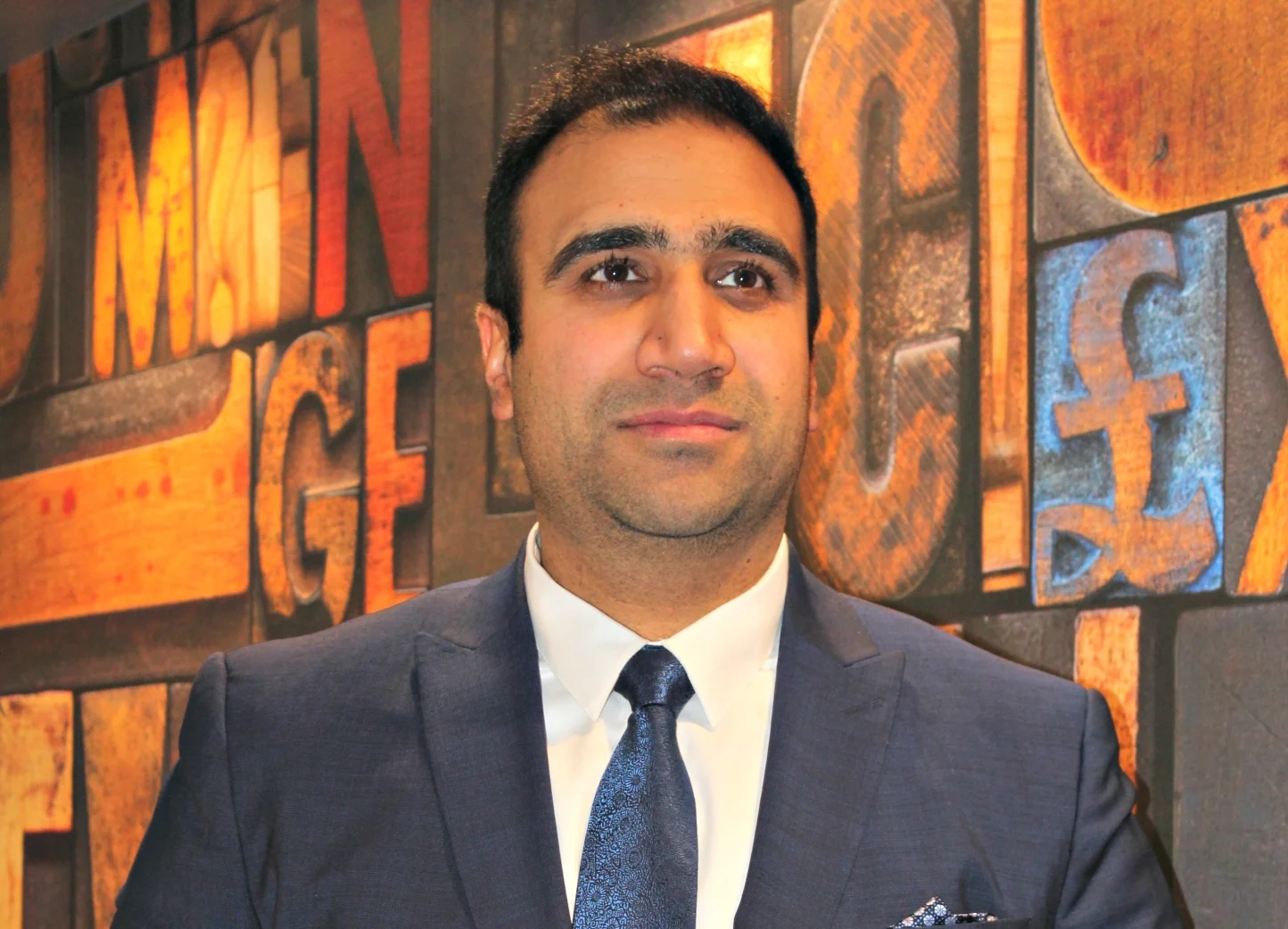
Spotlight Series: Sanjiv Parmar
We are honored to present our candid conversation with Sanjiv Parmar of Parmar Law (www.parmarlaw.ca). In our conversation, Sanjiv tells us the story of how his faith inspires his practice and how his experience as a former Crown Counsel influences the way he conducts himself as a legal professional. We are happy to share a glance into Sanjiv’s story in this Spotlight Series interview.

We are honored to present our candid conversation with Sanjiv Parmar of Parmar Law (www.parmarlaw.ca). In our conversation, Sanjiv tells us the story of how his faith inspires his practice and how his experience as a former Crown Counsel influences the way he conducts himself as a legal professional. We are happy to share a glance into Sanjiv’s story in this Spotlight Series interview.
Rafael Badiola
What inspired you to pursue the legal profession?

As a Sikh, I attend the Gurdwara, the Sikh temple, regularly and read from the Guru Granth Sahib, which teaches the concepts of Simran and Seva — to meditate and to assist the community. My faith helped me develop a passion for helping others. Sikhism continues to influence my practice up to this day. Parmar Law’s logo is a lion and a khanda. I chose the lion as it symbolizes courage. A khanda, in Sikhism, symbolizes truthfulness. Taken together, my logo means the courage to speak the truth, which continues to inspire me in my day-to-day practice. The logo is also in the shape of a P and an L for Parmar Law.
My family taught me from a young age that education and hard work is very important. I took a legal studies class in high school and it opened my eyes to a lawyer’s ability to affect the lives of others and advocate for the less fortunate. Lawyers can make the world a better place by working hard to advocate for people being taken advantage of and righting various injustices in the community. I feel blessed to be practicing law and pleased to be a mentor to an increasing number of lawyers in Calgary. I hope to see lawyers of various backgrounds take on more senior positions in the future.
What was the most challenging thing to date that you faced as a lawyer in Calgary?
For me, it was when I decided to start my own firm. Putting up your own shop is a daunting task as you are on your own – you have to navigate through things such as trust accounting, setting up systems and policies, developing precedents, looking for an office space, building your brand, and on top of it all, getting clients.
My education helped me a lot in overcoming the challenges of starting my own firm. My Bachelor of Arts in Political Science (Minor in Management and Society), Bachelor of Commerce, and Juris Doctor – all from the University of Calgary gave me the foundation for understanding and maneuvering through the various challenges I faced. I was also fortunate to have had some amazing work opportunities. My seven years at TD Canada Trust, where I worked as acting manager on some occasions, taught me how to provide strong customer service experience. I also interned at the Canadian Embassy in Washington, D.C. after law school. There, I attended think tanks, focus groups, congressional hearings and conferences on behalf of the government. I noticed the need for more legal representation for both domestic and international concerns and gained the ability to market, build and foster relationships. I also articled at a small general practice and was also an associate at a medium sized firm in downtown Calgary, where I learned how to deal with clients and first learned of lawyers’ various day-to-day responsibilities and of the business of law. I followed that experience by working at Alberta Justice, where I learned how to carry myself as a professional and as a member of the bar. All these skills greatly help me as a sole practitioner.
I had extensive experience in child welfare, family, criminal, immigration/refugee and employment/human rights law in private practise and then child welfare and family law with Alberta Justice; therefore, I decided to practise in these areas, along with child representation. These experiences helped me develop a niche within domestic violence and child welfare and also grow a practise in human rights and refugee work.
As a sole practitioner, where do you turn to for support?
I have had the privilege to work under and with some amazing lawyers. A highlight of my career was that very early on I had the fortune of working with the great Charlie Stewart Q.C. I was only able to work with Mr. Stewart for a few months prior to his passing. Despite the short amount of time, the lessons that I learned were invaluable. Mr. Stewart taught me various things such as how to analyze information, build cases, and how to examine evidence and run hearings. Mr. Stewart also trusted me with working on some very big cases early on in my career, which gave me more confidence. I was always in awe when I would attend court as Mr. Stewart’s agent, as he was very respected by his peers and judges alike. I was very inspired and looked up to him.
Throughout my legal career, I have been honoured to work with lawyers of diverse backgrounds, including in terms of faith, race and gender, whom are some of the best lawyers in the city. The various lawyers that I have had the pleasure of working with are very approachable and are willing to communicate regarding any questions that I may have about the practice of law.
The Canadian Bar Association is also an excellent source of support. The CBA frequently holds lunches where an expert lawyer or judge in a particular area of law is gracious enough to share their deeper insights. Not only have I learned a lot by going to these lunches, I am also able to connect with my colleagues and strengthen my professional network. I am also fortunate to reinforce and share my skills by speaking at these CBA meetings on various topics and on behalf of the Alberta Lawyers’ Assistance Society, in which I am a peer support volunteer. I highly recommend the CBA to any lawyer who needs support of any kind regarding the practice of law, and to get involved with executive positions, as I am with the Child Welfare section.
How did your experience as a Crown counsel help your practice?
My experience at the Crown’s office taught me a lot of things. Among other things, the Crown taught me how to conduct myself as an officer of the court, how to organize files, how to interact with clients and different professionals, and how to cordially work with opposing counsel. When you are working for the Crown, you are working for Alberta. You represent the government as a Crown Counsel, and the way you carry yourself is very important. On the other hand, when you are in private practise, you have different goals and it can be easy to forget your responsibilities as an officer of the court and become too emotionally invested in your files.
My experience with the Crown helps me to remain calm, which ultimately helps me help my clients by allowing me to see the big picture and articulate better for them. Being able to calmly consider situations is very important as doing so enables you to see facts and legal issues that you may not see if you are very emotionally invested. Avoiding being too emotionally invested in files also helps lawyers from being burnt out, which is more common in the community than we would like. I’d like to think of it as like a doctor or physician. While a doctor may maintain empathy towards their patients, they are still emotionally uninvested. You do not go to a doctor to have them take your side emotionally. You go to the doctor for them to tell you how things are, for their unbiased diagnosis, and for their advice going forward. You rely on their expertise and knowledge. This is what lawyers should be – lawyers not being too emotionally invested in their files helps them become stronger lawyers.

You were recognized as one of Calgary’s Best Mentors by the Sikh Youth of Calgary in 2017. Why do you choose to mentor?
I was approached by the SYC’s mentorship committee to mentor a University student who was thinking of applying to law school. The experience was amazing. I was named as the Mentor of the Year. My mentee won the Mentee of the Year, a scholarship, and is now actively involved in the community. I have been mentoring more students ever since. These students have given me as much as I have given them. They reaffirmed my passion for what I do. Sometimes it is easy to get bogged down with work. It is nice to remember how privileged we are as lawyers. We sometimes forget that it can be difficult to get into university and do well in university; that it is also difficult to do well in the LSAT and get into law school; and even after doing all of that and doing well in law school, it is even more difficult to get articles. All of these things are privileges and we are fortunate to have succeeded so far that sometimes we forget all of the hardships that we have been through. They reaffirmed my excitement to be a lawyer and to be able to give back to the community and help them attain their dreams and aspirations as well. I am also now really good friends with my mentees and through this program I was able to be involved in other community initiatives.
I advise my mentees and other lawyers that you need to be yourself. If you try to act outside of your personality, it usually does not work. Continue to educate yourself. Seek hands-on experience and volunteer. Be humble and professional, but don’t be afraid to speak the truth and don’t be afraid to fight for what you think is right. Don’t be afraid to show your passion. Be confident in your abilities. I think the key to this line of work is to find an area that you are passionate about, as when you enjoy and find purpose in your work, success shall surely follow.
What are the things that make you feel the most sense of accomplishment as an advocate?
My law firm’s tag line reads “Listen, Advise and Advocate.” I believe that these are the pillars to being a great lawyer. I feel accomplished every time I follow this mantra. I see to it that I follow this mantra for each of my clients. It helps me put my clients in a better position than what they were in before they came to see me. As their counsel, I ensure that I listen and pay attention to my clients’ specific concerns, which allows me to properly advise them and then advocate for their rights and position.
What are your plans for the future?
I want to be able to take Parmar Law to greater heights. It has been going very well, and we are currently in a position where we could hire more individuals. I want to be able to continue to help the people of Calgary by being the best lawyer that I can be, and for Parmar Law to be known as one of the best firms in the city. I would also like to start taking more work regarding international human rights initiatives.
In the meantime, I would like to maintain going to the gym and spend more time with friends and family. I would also like to continue to travel the world. I recently learned how to play a Harmonium, which is a classical Indian instrument, during my trip to India. I plan on getting better at it.

Spotlight Series: James-Scott Lee
We were pleased to interview James-Scott Lee, a partner at McCarthy Tétrault LLP’s Calgary office and a member of the firm’s business law practice. Over a candid conversation, James shared his story of growing up in Vancouver, his decision to pursue a law degree and the unique career path he took to Calgary. We are pleased to present his personal story in this Spotlight series interview.

We were pleased to interview James-Scott Lee, a partner at McCarthy Tétrault LLP’s Calgary office and a member of the firm’s business law practice. Over a candid conversation, James shared his story of growing up in Vancouver, his decision to pursue a law degree and the unique career path he took to Calgary. We are pleased to present his personal story in this Spotlight series interview.
Roy Lou
Q: You went from business to law, how did that happen?
The first time I thought about being a lawyer was when I was about 10 years old. My aunt had a property dispute and hired a prominent lawyer, Thomas R. Berger Q.C., to act on her behalf. The fact that my aunt spoke so highly of him sparked my interest in law.
But I was always interested in business as well. This stemmed from my aunt and father who were quite entrepreneurial. In 2002, I graduated from the Sauder School of Business with a degree in Marketing. When I graduated, employment prospects in the industry were bleak as the tech bubble had burst the year prior. Out of interest, I took an elective about the intersections between law and business. I loved it and decided to make the jump to law school and graduated with a JD from UVIC in 2005.
Q: Can you talk about your law school experience and extra-curricular you were involved with?
There were two particular experiences which stood out to me. The IP Program at Oxford and the Law Centre at the University of Victoria. During one of our first days in the university town, we witnessed President Bill Clinton attending Chelsea Clinton’s convocation with the secret service in tow. It was an eye-opening experience. Volunteering at the Law Centre taught me the importance of compassion and empathy for those less privileged.
I have to say, however that my biggest takeaways from law school were the lifelong friends I made and the skills I gained. Law school makes you jump through a lot of hoops. You have to be resilient and see things through to their conclusion. It also teaches you drive which will serve you in anything you do in your life. Attention to detail and working with others are also incredibly valuable traits I picked up.
I think a lot of people feel like they have to practice law, but I actually think a law school graduate has a variety of interesting options they can explore.

Q: Did you ever think about litigation or have you always been set on corporate law?
Once I started law school, I knew that corporate law was right for me. I really enjoy working with clients and advocating for their best interests. Advocacy really isn’t just reserved for litigators, it is something I do daily for my clients.
Q: How did you end up in Calgary from UVIC?
I ended up articling at a very small corporate commercial firm in Vancouver. It was a fine place to article but my principle was near the end of his career in 2006 and he wanted me to buy into the practice. I was essentially at a cross roads in my career.
I felt like if I wanted to work in teams, with like-minded people, and tackle complex big firm files I would have to move to a larger platform. Hence, I made the move to Calgary late in 2007 to a national firm and never looked back. Calgary is an inviting city and a great place to establish a career.
Q: Did you have a role model or a mentor when you were a young lawyer? Can you speak to the impact they’ve had on your career?
My role models include lawyers, clients, friends and family members. I work with such an amazing group of professionals on a daily basis that it is easy to find great mentors. I try to pick certain traits from everyone I work with; that has been an important part of my professional growth.
I think early in your career you should identify people that have had success and create opportunities to learn from them, like setting up coffees, lunches, and after work drinks. Everyone has something, a skill, experience or story, that you can learn from, just don’t be too shy to ask. I think it is also important to keep in mind that you can also learn from people who are junior to you and not necessarily just senior partners.
Q: Can you talk about the growing pains of a lawyer?
I think as a good lawyer you always have a healthy sense of self-doubt, until you have done your research and due diligence. One of the great benefits of being at a large firm is the pool of resources you can drawn on which certainly helps. For most people, I’d say that you would have to be in practice for 7 or 8 years before you feel comfortable running a moderately complex file. As important as it is to know substantive law, it is just as important, and maybe more so, to admit what you do not know.
Q: What do you consider to be the accomplishment in your career which you are the most proud of?
As an associate, I recall working late on the financing for a gas plant. There were about a million moving parts and most of the recognizable banking lawyers in Calgary were on the file. The significant moment came on the morning of closing, after an all-nighter, when all the parties were on the call and I could confirm at that point that the Bank was ready to fund. There was no champagne, but since the days of the Trust conversion, that doesn’t happen anymore anyways, does it?
Q: Could you speak about the importance of giving back and community involvement?
Other than my family and children, I’m passionate about helping those less fortunate. I think giving back is incredibly important and whether you are fortunate or not you’ve relied on the charity of people all your life. I certainly have, from my parents, family, colleagues and many others. I think it also keeps you engaged in the community and helps you focus on what is really important. In this Canadian society, we have to make sure the vulnerable and less fortunate aren’t left out in the cold.
One of the projects I’m really passionate about is Ping Pong for a Purpose, which raises money for the Calgary food bank. Mike Hoffman and Ryan Wales of ATB Financial, the founders of the non-profit, asked me to join this past year as a board member. In the last two years we have been able to raise approximately $27,000 through our charity events. The great thing about the Calgary Food Bank is for every dollar donated, they are able to distribute $5 worth of food.

Q: Do you feel like there any negative stereotypes still attached to Asian Canadian lawyers?
I think if there is a meekness stereotype, it is probably derived from the Asian culture’s emphasis on being deferential to elders as a matter of respect. I think young lawyers should realize that you can be respectful and still provide your input or opinion. We hire young, smart people to tell us what to do, so if they feel like they can’t share openly, we have to look at that. In any event, there has been tremendous push in the legal community to be more inclusive and progressive in the last decade or so.
Q: What would you like to see FACL as an organization accomplish in the immediate future?
I think FACL is still a young organization that has lots of legs. Increasing awareness and membership from people in and outside of the Asian community should be paramount.
FACL should focus on establishing its profile in the community in addition to building ethnic diversity in the profession. I think people want to be associated with a group that’s focused on ethnic diversity, but that is also charitable in its own right. I think the way a group is going to gain recognition and support from the larger community is to place emphasis on raising money, awareness or volunteering for issues that relate to the larger community. Poverty, famine, drug abuse, mental health are issues that affect people from every ethnic background. This kind of community involvement will only help to make FACL more dynamic and set the organization up for the long haul.

Spotlight Series: Jonathan Ng
We recently had the privilege of interviewing Jonathan Ng, who practices Wills and Estates at Underwood Gilholme. In our conversation, Jonathan reflects on how he succeeded in securing a fruitful and fulfilling practice. We are delighted in having the opportunity to share the story of a lawyer who is dedicated in advocating for his clients’ wishes in this Spotlight Series interview.

We recently had the privilege of interviewing Jonathan Ng, who practices Wills and Estates at Underwood Gilholme. In our conversation, Jonathan reflects on how he succeeded in securing a fruitful and fulfilling practice. We are delighted in having the opportunity to share the story of a lawyer who is dedicated in advocating for his clients’ wishes in this Spotlight Series interview.
Rafael Badiola
Out of all your accomplishments, what motivates you the most?
I enjoy helping the clients. I know it sounds cliché, but people come in with a very strong wish or set of wishes. It is inspiring if I can successfully advocate for those wishes. In addition to the actual content of the work, I am also a business owner. I am motivated by maintaining my business, growing it, and working with my colleagues who are very passionate about the practice.
I also look forward to becoming a father. I have a great father who worked very hard. He came to Canada, along with my mother, from the Philippines and I am grateful for the values that they instilled in me such as hard work and dedication to the family. I can only hope that I can be half as good to my children as my parents were to me.

What were some of the challenges that your family faced when you moved to Canada? Did you face any challenges as a Filipino lawyer in Calgary?
My parents immigrated to Canada in the early 1970’s and were the first members of their families to settle in the country. Although they had the benefit of professional degrees from the Philippines, they had to work very hard to demonstrate their worth. As a second generation Canadian, I often take for granted the network of people that have helped me along the way and that were less accessible to my parents as they built their careers from scratch.
The Filipino population in Calgary is still relatively new and not well represented among professionals. I regularly find myself being the first Filipino lawyer that many people meet, but I wouldn’t say that I have faced any challenges thus far. Some of my clients are curious about my background and appreciate my family story.
You were formerly an environmental engineer. What made you decide to switch to a law career?
As an environmental engineer, I spent a lot of time working with lawyers regarding environmental disputes. I wanted to make a professional change, and I was fascinated by the way lawyers think. Engineers are trained to see things in black and white, right and wrong, success and failure, whereas lawyers spoke in a language that was based in shades of grey, and I was very fascinated about that.
Compared to engineering, I found the practice of law to be less diverse but equally inclusive. There is a disparity in diversity between lawyers and the clients they serve. However, I feel that most members of the profession recognize this disparity and see the benefit in building a more diverse bar. This is particularly important in private client services, especially Wills and Estates. When dealing with estates, it is crucial to have an appreciation for cultural differences when it comes to family values and wealth.
I must mention that engineering struggles with gender parity in school, whereas my class in law school was composed of nearly 60% women. Notwithstanding, I recognize that there are challenges with women staying in the legal profession and this should be examined closer.
Could you tell us about the factors that you considered in deciding to move to a firm which primarily practices Wills and Estates?
I originally worked at a firm that concentrated on cross border litigation. They also concentrated on another area, which was Wills and Estates. After trying both sides of the firm, I was very much attracted to the Wills and Estates part of the practice. My articling principal in Ontario, Adam Cappelli of Cambridge LLP, worked entirely in the area of Wills and Estates. Like a good articling student, I did what Adam did. He was a fantastic lawyer and an excellent mentor. He always made time for me after a busy day to explain what we were doing. He had a very appealing practice, and was a great guy to work with. The firm was very kind to introduce him to me and allow me to focus on Wills and Estates.
I also had an interesting articling experience as Adam was the host of a cable access television talk show about Wills and Estates. My job was to book the guests, write some of the scripts, and prepare the material for the show like a producer. Looking back, it was a lot of work, but it was a great experience as not only did it teach me about the law, but also about my principal's marketing style. This experience truly helped me get my start in the practice of Wills and Estates.
What are the main differences between your practice at Underwood and Gilholme and that of others?
Wills and Estates is centered on private clients. We work for people. We represent families. For that reason, Wills and Estates is very special and I feel like a family's lawyer. Although my practice area is dedicated to estate planning and administration, families often entrust us with many secrets and ask us many personal questions. People share so much with you in the Wills and Estates engagement. They tell you not only about their family and their assets but also their wishes after they pass on, and I consider it an honor to be involved in that process.
What are the most challenging aspects of working at a Wills and Estates firm? What do you do to overcome these challenges?
Wills and Estates is a volume business. You work with many clients, and it is not uncommon for me to meet with four, five, or six families in an eight-hour period. Each family has a different set of facts and you need to keep everything in order. While it is very rewarding, it can also be very challenging as people are speaking with you in the context of death. You could have a positive conversation with some clients regarding death, but for others it may be more challenging given that it is possibly the first time that they have considered their own mortality.
I am able to handle the stresses of my practice through the support of my wife. I also work with five exceptional lawyers that focus entirely on Wills and Estates. If the challenge that I am facing is of a legal nature, I am lucky to have a second opinion readily available from very strong colleagues.

Do you usually refer clients to other lawyers first or do other lawyers refer their clients to you?
Oftentimes, the first time a person meets a lawyer is when they are buying a home, where they need a Real Estate lawyer, or when they are preparing a Will, where they would need a Wills and Estates lawyer. It may arise during the conversation between a client and Real Estate lawyer that they are now also interested in preparing a Will as they now own property. Sometimes the Real Estate lawyer prepares the Will but other times the Real Estate lawyer observes that the issues would be better handled by a Wills and Estates lawyer. It also goes the other way. My clients may ask me for advice on a Real Estate transaction, in which case I am happy to refer them to a colleague who could help them better.
What advice would you give for students and lawyers that are thinking of practicing Wills and Estates law?
The main piece of advice that I would give to lawyers who are thinking of practicing Wills and Estates is to make the time for each and every client. This seems counterintuitive when you are dealing with a volume business where you can see six or more clients per day. But when people come to see you, they come to see you regarding something that is very sacred to them, and is something that they often keep in secret. These people entrust you with this sensitive information in the hopes that you could help them with their concerns. What resonates most with the client is the knowledge that you, as their lawyer, have set aside the time necessary to see their wishes carried out. If that means seeing less clients, then so be it. The quality of your work should shine through over the quantity. When clients refer you to others, they will talk about how thorough you were instead of how fast you dealt with their specific concern.
Wills and Estates, Trusts, and Tax courses provide a very strong basis for this practice. I would also identify Real Estate and Family Law as other helpful classes. Beyond that, I would highly encourage students to volunteer with organizations that provide services to the elderly, because many of their concerns cross over with the practice. In doing so, one could gain compassion and familiarity with elder issues. One particular place that students may be interested in is the Kerby Centre in Calgary, which provides education and activities for seniors.
During Law School you were awarded the Grant McKibben Prize, which is given to a graduating student who epitomizes the energy and spirit of the Calgary law school community. Can you tell us more about the things that you did that led to this award?
I dedicated a lot of my time to the University of Calgary's law show, which is a variety show that takes place every March. I loved doing it and on some days, I think I spent more time preparing material for the show than writing case briefs. My intention was not to win an award, but I always loved performing as a kid and I enjoyed the creative process. I got to know some of my classmates through the law show, and I enjoyed working with them on a project that was not law related. I also participated in moots and negotiation competitions.
Photos: Meaghan Lanaria

FACL Western endorses candidate for Alberta Bencher: Stacy Petriuk
The Federation of Asian Canadian Lawyers (FACL) Western encourages all its members to vote in the upcoming Law Society of Alberta Bencher elections.
The Federation of Asian Canadian Lawyers (FACL) Western encourages all its members to vote in the upcoming Law Society of Alberta Bencher elections. The online voting period opens on November 1, 2017, and closes on November 15, 2017. For complete details about the election, please visit: https://www.lawsociety.ab.ca/about-us/board-and-committees/2017-bencher-election/
FACL Western Candidate Endorsements for Bencher
FACL Western thanks the candidates who requested our endorsement and wishes all of them the best in the final legs of their campaigns. For details about FACL Western's Endorsement Policy, please CLICK HERE.
FACL Western is pleased to officially endorse Stacy Petriuk as a candidate in the upcoming Alberta bencher election. We encourage all FACL Western members to vote for Stacy. She has made significant contributions to our profession and the broader community. We strongly believe that she will work to promote equity, justice, and opportunity within the legal profession if elected. Please take the time to review her profile:

Stacy Petriuk
Managing Partner, JSS Barristers
Stacy was born and raised in Calgary. She earned her Bachelor of Laws from the University of Calgary where she was awarded the Campbell McLaurin Achievement Award, the law school's silver medal. Stacy also has a Master of Laws from the University of Cambridge. She was awarded the Viscount Bennett Scholarship and the Cambridge Commonwealth Trust Bursary while at the University of Cambridge. Immediately after her articles, Stacy joined JSS Barristers as its fifth lawyer. She has been the Managing Partner of JSS Barristers since 2015. Her practice focuses exclusively on the area of civil litigation, with an emphasis on professional negligence defence work and commercial litigation. Stacy and JSS Barristers have been key supporters of FACL Western’s various initiatives since its inception in 2014.
Stacy has served the legal profession as a member of the Law Society of Alberta Continuing Competence Committee (2012 to 2014), member of the Southern Alberta Section of the Joint Canadian Bar Association/Law Society of Alberta Legislative Review Committee (2001 to 2011) and Vice-President Seminars of the Alberta Civil Trial Lawyers Association (2002 to 2004). Outside of the legal profession, Stacy is currently a member of the Board of Directors of Calgary Arts Development and has previously served as a City of Calgary appointed member of the Calgary Region Arts Foundation (2002 to 2005). Stacy has presented at numerous seminars in Calgary and Edmonton on topics such as e-trials, e-discovery, drafting pleadings, and the Rules of Court.

Spotlight Series: George Tai
We were honoured to interview George Tai, the financial managing partner at Carscallen LLP and a member of the firm’s business law practice. George is set to embark on a new chapter of his career this fall when he transitions to Dentons LLP. Over a candid conversation, George shared his story of growing up in an immigrant family, his decision to pursue a law degree and his insight into the future of the legal profession. We are pleased to present his personal story in this Spotlight series interview.

We were honoured to interview George Tai, the financial managing partner at Carscallen LLP and a member of the firm’s business law practice. George is set to embark on a new chapter of his career this fall when he transitions to Dentons LLP. Over a candid conversation, George shared his story of growing up in an immigrant family, his decision to pursue a law degree and his insight into the future of the legal profession. We are pleased to present his personal story in this Spotlight series interview.
Roy Lou
Q: What made you decide to pursue a law degree?
When I was around one years old my family immigrated from Taipei to Winnipeg. We moved a lot when I was young because of my father’s career as an engineer. I lived in Fredericton as a teenager and finished up high school in Fort McMurray. I chose to attend the University of Toronto to study biochemistry, because it always felt like I was bound to one of three careers: a dentist, an engineer, or a doctor. Being a dutiful oldest son, I obliged my parents. I knew I couldn’t be an engineer because I wasn’t any good at math. I chose biochemistry and ended up receiving acceptance to dentistry school and was waitlisted for medical school. However, those were the goals set out by my parents, which weren’t necessarily my own goal. I knew I wanted to go to law school and thankfully my parents supported my choice.
Q: What was it like growing up in an immigrant family?
When I was a child growing up in the 1970’s, there were very few Chinese immigrants. Most residents in the Winnipeg Chinese Canadian community were descendants from the rail road times and were relatively well established. I was often one of the only few Asian students in our entire school. I remember my dad hand making soybean milk and my mom making her own dumplings. There were no Asian grocery stores around us. My parents helped to set up an organization called the Manitoba Academy of Chinese Studies to teach Chinese to the immigrant kids in the city. In a way, I watched my parents help build the Chinese immigrant community Winnipeg.
Q: Did this change your view on the Chinese immigrant community and prompt you to give back?
When you are a lawyer, your time is your most valuable asset. The key for me is finding something that I am passionate it about because then it doesn’t feel like work but a part of your life. For example, I love fly fishing, so I joined the Bow River chapter of Trout Unlimited Canada. I learned a lot about the environmental aspects of water sheds and river quality.
I also volunteer for the Calgary Chinese Community Service Association. There were so many people that helped us along the way when I was young, when my parents were trying to adjust to life in Canada. I wanted to give back. While I am dealing with a different set of issues than I am used to in my practice, such as landlord tenant disputes or family law matters, I find the work very fulfilling.
Q: As one of the few Chinese lawyers practicing at the time, what would you say was your most significant challenge early in your career?
I can only speak to my experiences as a solicitor but I didn’t experience any overt discrimination. All my colleagues and opposing lawyers were gracious and kind to me. Moreover, I think times are different and stereotypes are changing. I was one of a handful of Asian law students at Western Law. There are so many young Asian Canadian lawyers and law students today, and I believe that all of you can help break down any existing barriers. That said, I think the disadvantage I had came in the form of a lack of support systems and networks. Without family connections or an established professional network of Asian lawyers in place I had to deal with a lot of adversity alone, and that was quite difficult at times.
To this end, I am very excited about the growth of FACL. I think the organization is doing great work in connecting young legal professionals to the Calgary bar.
Every immigrant wave that comes to Canada has had its influence on shaping our country, including political and social governance. A major avenue of this influence is the law. Law is a fundamental feature that influences that quality of politics and government. You can see the influence of the various waves of immigrants that came to Canada, whether it be Irish, Ukranian or Italian. Opportunities are endless for young Asian Canadians in the profession and empowering them is a necessary step to forward progress.

Q: Did you have a mentor who really helped early on in your career?
I never had one specific mentor. With my somewhat unique background in biochemistry and cultural heritage, there was nobody that could initially really relate to me at my firm. Instead I would say I had a group of mentors who were my colleagues. I was fortunate to begin my career in Calgary with a great firm and be able to learn about the practice of law from my talented colleagues.
Q: What would you say is your proudest achievement to date?
I’d like to think that I’m too young to have a crowning achievement in my career. Every file I work on, regardless of whether it is a billion-dollar deal or a million-dollar deal, it is just as important to that respective client. The satisfaction for me is when I complete a closing or successfully facilitate a transaction, and my clients calls me back for another deal.
One of my unique experiences in law would be when I was involved in an international patent dispute. Our client was being sued by a Chinese company in the telecommunications business. I had the opportunity to attend proceedings at the Beijing High Court and watch the trial unfold. It was a very high-profile dispute and certainly something I would never forget.
Q: What made you move to Dentons LLP at this phase of your career?
The world is changing, the global market is expanding. This is true for all professions, not just ours. As a solicitor, the opportunities to practice law globally are exciting. I am also fascinated by how law firms are adapting to this changing market place. At the end of the day, law firms are driven by clients and relationships absolutely matter. While our clients have become more international in their ventures and vision, they are still tied down locally.
To service clients globally, law firms still rely on having a strong local ground game. Look at a few international firms, including Norton Rose Fulbright and Dentons. These firms have grown through mergers, this reflects the importance of having local roots and connections.
I think we should view the rise of the international law firm as a response to changing client demands. Law is a service industry and it is in the best interest of law firms to have the infrastructure to help assist all the different client needs. That’s what it means to be a full-service firm. To answer your question, I think the global vision and opportunities to tackle international projects is what drew me to Dentons. This was a very hard decision because I am leaving a truly exceptional law firm here at Carscallen.
Q: What are you passionate about or interested in outside of law?
I love to cook. I am a bit of a food network junkie. Barbecue and French cooking are two of my favorites. I think what I love about it is the discovery, the challenge of not relying on recipes but just fashioning something delicious out of what you have available. My wife likes to give me a hard time sometimes because I read lots of cook books without ever following them.

I also love the outdoors, I am an avid fly fisher. I fell in love with fishing as a kid. I don’t do as much of it these days, but I still love to build rods and tie flies. There is a saying for fishermen. First you catch as many fish as you can. Then you want to catch the biggest fish you can, and thirdly you only catch the fish you want to catch. I’m past the third stage. I’m fine taking my fly rod out for a walk by the Bow River, which features some world class trout fishing and not even bothering to cast a fly.
Between my career and family, I’ve really enjoyed having the time to pursue a couple of my real passion and hobbies. It helps round out what can often be quite a hectic life.
Photos: Rafael Badiola
2017 AGM & New Directors
On July 20, 2017, we held our 2017 Annual General Meeting at the Calgary offices of Osler, Hoskin & Harcourt LLP. We were also joined remotely by members and executives in Vancouver, Edmonton, Saskatoon, Winnipeg, and Ottawa.

On July 20, 2017, we held our 2017 Annual General Meeting at the Calgary offices of Osler, Hoskin & Harcourt LLP. We were also joined remotely by members and executives in Vancouver, Edmonton, Saskatoon, Winnipeg, Toronto and Ottawa. We had a record number of attendees and many were joining us for the very first time. It was a great opportunity for FACL Western to reflect on a very successful year, and discuss upcoming events.
Jessie Gill was elected as the new president of FACL Western, and Steven Ngo has now officially stepped into the role of the Immediate Past President. Akash Bir was also voted in as the President-Elect, forming our three person executive team. The three person executive system ensures a smooth transition and efficient succession planning for our organization. As such, Steven Ngo will continue to play a key role with FACL Western, providing advice and guidance to the new president and the executive team.
We also elected a new slate of incumbent and new directors:
Directors
JESSIE GILL | Carscallen LLP | Bio
DAVID TAM | Parlee McLaws LLP | Bio
RON LO | FGL Sports / Mark's | Bio
DOUGLAS LEE | Akram Attia Law Group | Bio
GEORGE WONG | Dentons Canada LLP | Bio
AKASH BIR | The Counsel Network | Bio
STEVEN NGO | Osler, Hoskin & Harcourt LLP | Bio
JASON PAW | MLT Aikins LLP | Bio
JULIE KIM | Shim Law LLP | Bio
HANSEN WONG | Walsh LLP | Bio
Student Directors
YULIN SHIH | University of Calgary | Bio
JOSHUA MAMDANI | University of Calgary | Bio
YANG (YOUNG) WANG | University of Alberta | Bio
KRYSTIN WANG | University of Saskatchewan | Bio
We want to recognize Carina Chiu, Geeth Makepeace and Stefanie Wong for their dedication and service to FACL Western as they retire from their respective director positions.

We have another amazing term planned ahead of us with a student chapter slated to launch at the College of Law - University of Saskatchewan in September and some new professional development initiatives coming up.
Thank you for your continued interest and support, and we look forward to seeing you at our next event!
If you're interested in getting involved with FACL Western, please reach out to info@faclwestern.com.

Spotlight Series: Oliver Ho
I recently had the fortune to get to know Oliver Ho. Oliver is currently a partner at Jensen Shawa Solomon Duguid Hawkes LLP, and was conferred his B.A. and LL.B concurrently in 2002, and his MBA in 2016. Oliver is genuinely passionate about helping others and giving back to the community, and in this article we learn more about his inspiring story.

I recently had the fortune to get to know Oliver Ho. Oliver is currently a partner at Jensen Shawa Solomon Duguid Hawkes LLP, and was conferred his B.A. and LL.B concurrently in 2002, and his MBA in 2016. Oliver is genuinely passionate about helping others and giving back to the community, and in this article we learn more about his inspiring story.
Rafael Badiola
14 years after you completed your BA and LLB, you obtained your MBA. What made you decide to go back and further your education?
Let me start off by saying that legal education is one of the best kinds of education that one can obtain. This goes for people who decide to practice law and those who don’t practice law. A legal education can be useful to anybody. For me, I wanted to be a lawyer first. After having spent many years building my legal skills, I decided that I should spend some time focusing on different elements of my practice.
I had been working for over a decade before I decided to go back to school to pursue an education in management. I was in the stage of my career where learning business skills would be helpful not only in advising clients, but also in the administration of a law firm. I always had an interest in business, and the timing seemed right to continue that pursuit. Additionally, the subject matter for my thesis in business school was law firm mergers. Studying this subject and having worked through a period of time when law firm mergers was particularly popular gave me greater insight into the operation strategies adopted by law firms. Now that I have been through business school, I can say that it complements a legal education. Given that lawyers work in a business environment, and that business is an important element to all of our clients, having a knowledge of business and having business skills rounds–out the skills lawyers learn at school and in their practices.
As a lawyer today, do you still feel the same motivation when you started law school?
For me, my initial motivation was that both of my parents graduated from University of Calgary’s Faculty of Law, and I wanted to follow in their footsteps. I was told by my parents that I always liked to argue when I was younger. To a large extent I still find debating issues to be intellectually stimulating. However, as a lawyer, I am now more motivated by making a difference in the community. When I first entered law school, I had an expectation that I was going to make a difference, but I didn’t know how I was going to do that. Now that I have practiced law for a number of years, I have a better idea of what I can and cannot do, and what the Courts can and cannot do. Listening, for example, is a skill that lawyers develop which I would not have originally imagined would be as helpful but can surprisingly make a big difference in helping clients.
How has being a lawyer changed your life?
The practice of law has helped me develop and refine some very tangible skills, for example, logical reasoning, problem solving, and public speaking. These are valuable skills, and using them every day has given me the opportunity to refine them and make them a part of my everyday thinking. But the practice of law has also brought me much insight into society and the way our world works. As a litigator, I deal with other people’s problems every day, and that exposure allows me to see our community from a different perspective. We are fortunate to be lawyers; we know what our good days are like and what our bad days are like. But it’s eye opening to see what a good day or a bad day for someone else means. Being in law also taught me to harness my skills and pick my battles. We can go through life debating every issue and finding faults or weaknesses in every detail, but choosing your battles and prioritizing the important elements of life have helped me to see the world from a broader perspective.
How did you know that you wanted to practice in the area that you currently practice?
I was not wholly convinced that I was going to be a litigator. My interest in litigation first grew when I participated in moots in law school. I loved the thrill of developing and making arguments, and then having to immediately defend your positions by answering questions from the Court. It was only after my articles that I finally realized that litigation is what I wanted to pursue.
I articled at a large national firm so I was lucky enough to be exposed to many different practice areas and work with many different lawyers. However, I found myself enjoying the duties associated with litigation the most during duty student week, which is a part of the articling process where an articling student is responsible for going to the Court to make procedural or relatively straight-forward applications that other lawyers at the firm may need to obtain. This experience made me realize that litigation is something that I really wanted to pursue.
I decided to join Jensen Shawa Solomon Duguid Hawkes LLP because I wanted to focus on litigation. Leaving a large national firm was a difficult decision because as law students we had all worked so hard to get matched with a prestigious firm; in some ways, I thought I was giving up on this great opportunity. But by this time I knew that I was particularly interested in the type of litigation that JSS was doing, and that joining a litigation boutique firm would also be an opportunity in and of itself. I decided to take this leap of faith, and I’ve never looked back.

Did work life balance affect your decision to join JSS LLP?
It was not a factor. I was young back then and I was prepared to put in the hours. However, I saw JSS as something that could grow and that I could grow with it. JSS’s size and business structure gives us the ability to help some individuals who might not otherwise be able to retain a lawyer at my old firm. I was attracted to the idea of being a part of a law firm that was growing, and which I could grow with. Since I’ve joined the firm, we have grown to over twice the number of lawyers. Looking back, I see that I wasn’t particularly concerned with work life balance as a young lawyer, but today, I see that work life balance is an important factor in pursuing a long legal career.
What are some of your accomplishments that you are proud of?
I am proud of being able to mentor young lawyers; I am fortunate to have the opportunity to mentor young lawyers who are members of our firm, members of FACL, and law students in general. I am also very proud that my family and I were able to set up a scholarship for students who are interested in spending some of their legal education studying at the University of Hong Kong. The University of Calgary’s Faculty of Law has a program where students may choose to spend one or more of their semesters studying law at other universities, including the University of Hong Kong. My family’s ethnic background is from Hong Kong, and the University of Calgary’s Faculty of Law gave us the tools that we need to earn our livelihood. We are proud to be Chinese Canadians, we are proud to be Calgarians, and we are proud to be lawyers. This scholarship allows us to give back to not only the University of Calgary and to today’s students, but also to those communities that helped us make our lives a reality. We have good clients, strong and fruitful practices, and we could not have come this far without the support of the Chinese, Canadian or legal communities. The scholarship is a way to contribute to those things and encourage those communities to come together.
We are very impressed by your accomplishments, but what do you do in your spare time?
I’ve been a volunteer judge for various University of Calgary law moot teams. A great moot team really shines if they put in the extra effort to prepare. The more you know about the law, and the more you know about the details of the fact situation, the easier it would be to answer the questions that can come from the Bench.
When I was preparing for my moots, I would put in a lot of extra hours. I was always reading relevant cases and re-reading the fact scenario. I also practiced my presentation skills, both oral and in writing. I always edited and revised a factum as much as I could because doing it over and over helps you find potential mistakes and fix them.
From what I understand you are also a member of the Board of Directors for the Youth Singers of Calgary. Could you tell us more about that?
I’ve had an interest in music my entire life. I spent 15 years singing with the Calgary Boys Choir before shifting to the Youth Singers of Calgary where I sang for another decade or so. I met some of my best friends in the organization and have traveled to many continents with them.
A big part of my life has also been teaching at the Youth Singers of Calgary. I was the Assistant Director for the Junior High division for a number of years, and I like to think that I contributed to those students’ interest in music. Being on the Board today is a way that I can continue to contribute to the organization.
I also performed as a musician on 5 different continents in the past as a singer with my choirs. I don’t sing in a group anymore, but I do play in a band that started out as my firm’s band, the “AdvoCats”. We’re now called the “Anton Pillars and the Shredders”. We are a cover band that provides entertainment to firm members and the legal community. Most of Anton Pillar’s gigs are fund raisers. We have done battle of the bands for a number of years, such as the March of Dimes fundraiser. We are all great lawyers, and less-great musicians, so don’t expect us to be quitting our day jobs anytime soon.
Are there any similarities between appearing in Court and singing or performing in front of an audience?
Very good point. Both require a certain level of confidence and effective communication skills. Self-confidence may not be natural to everybody, but it is a skill that you can learn and practice. Mooting is an excellent forum to practice those skills. You might not win all the time, but that in itself is practicing. At some point in your career you are going to speak to a judge – why not use moots to practice advocacy skills or performing to practice your self-confidence and skills of persuasion? When performing you need to be able to communicate; it can be simple as using proper diction, but also in the way you convey a message, which goes for both being on stage and in Court.
How do you balance your time between your busy schedule and your other endeavors?
You make the time for things that are important to you. Time for family, career, hobbies and community are all important and should play a part in our lives. If you think of something as important, you will find time for that thing. I find that as lawyers, we all know that we have to work hard in order to best serve our clients, but we also appreciate when our work-loads aren’t as busy when we can spend more time with our friends and families. Balance is a tricky thing; I have found it’s best learned organically and over time. The longer you practice law, the better you get at balancing.
Photos: Isce Lanaria

Spotlight Series: Steven Ngo
Everyone who comes across Steven Ngo immediately notices his energy. Then they become impressed by his accomplishments. From building communities, to simply bringing joy to others through his music, his ideas and execution bring people together. In this article we probed a little bit more into what makes Steven who he is.
Everyone who comes across Steven Ngo immediately notices his energy. Then they become impressed by his accomplishments. From building communities, to simply bringing joy to others through his music, his ideas and execution bring people together. In this article we probed a little bit more into what makes Steven who he is.
We know you have a packed schedule, and are convinced that you are great at prioritizing things. But there must be things that you just have to let go. How do you choose between what to let go and what not to let go?
I like to think of life as seasons, similar to a sports season. There is the regular season when you are playing consistently and things are generally steady. Then, there is the playoff season when you really need to put the pedal to the metal and work hard – because it is the playoffs. Then, there is the off-season, which is a period of relaxation and recuperation. Recognizing which season you are in is important.
In terms of priorities, it comes down to what your three key priorities are. To me, my three key priorities are my career, my relationships and my personal health. You constantly need to manage the limited energy that you have and ask how does the particular request or commitment fit into these three priorities?
Can you elaborate a bit more on this?
When you ask yourself “what makes you happy”, most would say that it is either money, friends, health, or family. But it isn’t just any one of those. I believe that there are three pillars to happiness.
The first pillar is the career and finances - you need a strong career and the financial stability in order to be happy. The second one is family and relationships, and the third one is health. If your life is lacking in any one of these three areas, you won’t be happy.
For instance, you can have all the money in the world, be in the best shape of your life, but if your relationships are lacking, you are going to be a miserable person. If you have strong friendships and great health, but your career and finances are lacking, you will not be happy either. You need all three pillars.
I like how you focused on “knowing what makes you happy”, but given the activities that you take on, you must receive a lot of push back in certain situations. How do you stay motivated, and focus through that?
My motivation comes from my parents. My mom was an immigrant and my dad was a refugee to Canada. They struggled hard during my childhood.
I remember when I was a kid, my friends had the latest Game Boy and I really wanted one too. When I asked my mom to buy me one, she said: “We have no money.” I was so frustrated and remember promising to myself that when I make money in future, I will buy all the games that I want. Mind you, I do have a collection of games now, but I really don’t care for them anymore. Seeing how hard my parents hustled during my childhood inspires me daily to work hard and cherish what I am so fortunate to have.
In terms of stay focused, while it is important to keep your long-term goal in mind, it is the process that is most important. It is the small steps over time, which can lead to instrumental success.
What would be a lesson that you would like to share with us which you hold dear to you heart?
The Slight Edge philosophy underlies many of my daily actions. It is the reason FACL Western and my other non-profit, HUM, was founded in the first place and how I was able to do relatively well in law school and get to where I am (see The Slight Edge by Jeff Olson).
When people generally think of success, they imagine grandiose events like winning an Olympic medal or launching a multi-million dollar start-up. However, success is the small, little things over time that accumulate into that grandiose moment.
The Slight Edge is about the little things that are easy to do and also easy not to do. For example, if you do not brush your teeth for a day, it might not be a major issue. But try not brushing your teeth for a week, a month or a year even. You are not only going to have terrible breath, but will have some serious issues with your dental health.
The small things in life work the same way. You do a little extra work here and there, spend an extra hour in the library studying or do an extra rep at the gym. These little things add up over time and compound into extraordinary success or extraordinary failure.
Where do you learn lessons like this?
I’m an avid reader. There are over 7 billion people in the world, and there is at least one person who has gone through what you are going through. At every cross-roads in my life, I try to read books on that subject matter. This was influenced by my uncle who forced me to listen to audio books for 6-7 hours at a time on our road trips together.
How do you squeeze time to read books given your busy schedule?
It really comes down to energy. When you have the energy, you will have the enthusiasm to do things and you will do things faster. In today’s world, we are constantly bombarded with distractions whether it is social media, emails or your news feed. These distractions draw away from your energy. The key is to manage that energy and nurture it.

We are well aware of your community building activities, but we also know that you constantly participate in activities that improve yourself. Given your busy schedule, why?
Imagine yourself as a glass of water. There are many external influences that may tint that glass of water. If you do not consciously monitor what goes into that glass of water, the water can become muddy very fast. To avoid this, I try to flush that glass with positive news, books and surrounding myself with good people. This is how you stay insulated from the world around you. By improving yourself, you can then improve and support others in the community.
How do you start up an organization?
There is a difference between an idea and executing an idea. An idea that has not been executed is simply a dream. I often hear from people that “I had that idea too” or “that was exactly that I was going to do”.
The difference between dreamers and leaders is that leaders execute on their ideas. When you start executing, you will receive push-back from peers around you and even your family. You need to expect this going in.
Whenever I start a new venture, I tell my teams that there are three types of people you will encounter. First, there are the "champions" who will instantly love your idea. Secondly, there are "fence sitters" who are simply unsure and are waiting for more people to jump on board. Lastly, there are the “haters” – they will hate your idea no matter what you tell them.
The key to starting up an organization is to find the champions, and ignore everyone else. Once your idea gains sufficient momentum, the fence-sitters will join your cause and it will become unstoppable. I recently started a new non-profit organization with a friend called The Living Room Series and the exact scenario played out.
How do you manage time then?
Time management is outdated. I think the key in today’s world is attention management. While the smartphone has revolutionized the way that we work and interact, we are constantly bombarded with notifications from the same device.
Being able to block out things that detract you from your day and focusing on the task at hand will help you do well in the future.
Now that we know a bit more about you, could you tell us what your typical day looks like?
There is really no typical day. Things can change drastically, but I believe in principles and routines.
I follow what I called the “book-end” principle. I make sure that the start and the end of my day is 100% structured. As long as I follow this set routine, the day will generally go by quite smoothly.
Once I get up the morning, I do not check my email, social media or notifications. This can be the worst thing you can do when you get up. Instead, I turn on a meditation app called Headspace and meditate for 10 minutes. After the meditation, I do 10 push-ups to get the blood-flowing and listen to something inspirational like Darren Hardy’s Daily Mentoring program while I get ready. After washing up, I check my emails to see if there is anything urgent and make my way to work. During my walk to work, I would listen to a podcast or an audiobook. Once I get into the office, I simply let the day happen.
This one’s for the curious folks: how much sleep do you get?
About 5-6 hours on average.

Spotlight Series: Omar Ha-Redeye
Omar Ha-Redeye is a Toronto lawyer, legal academic, and legal educator committed to access to justice and public service. He holds a JD from Western Law and an LLM from Osgoode Hall. He operates out of Fleet Street Law with a practice background that includes civil litigation, employment and labour law, health law, and technology law.
Omar Ha-Redeye is a Toronto lawyer, legal academic, and legal educator committed to access to justice and public service. He holds a JD from Western Law and an LLM from Osgoode Hall. He operates out of Fleet Street Law with a practice background that includes civil litigation, employment and labour law, health law, and technology law. Omar also teaches law and ethics at Ryerson University as an Adjunct Professor. In 2011, he was named one of the top 12 social media influencers practicing law in Canada and was presented the Diamond Jubilee Medal in 2013 for his contributions to society and professional achievements. In 2015, the Ontario Bar Association presented him with the OBA Foundation Award for exceptional contributions towards improvements to the legal system and public legal education. In 2017, Omar is receiving the Deans' Teaching Award at Ted Rogers School of Management at Ryerson University.
What’s something you’re passionate about outside of the law?
Outside of the law, I’m passionate about being involved in the community. For me, that includes involvement in politics, in boards, and in a local CHC (Community Health Center). It’s a matter of being connected to society and to social causes. In a lot of ways, it’s one of the reasons I ended up in law. I wanted to be involved in making an actual difference, and in the things people were doing on a day to day basis.
How did you end up with law as a career?
I like to joke that law was my fifth career. I started out in nuclear medicine technology, then did health management, emergency management, public relations, and then finally law.
Ending up in law was in many ways a fluke for someone who came in with a science background. I never envisioned that I was ever going to be a lawyer, but I found that all roads led to law, as everything I did had a legal dimension. I realized very quickly that having a background in law gives you a deep understanding simply about the fabric of life. That's what got me intrigued in terms of going to law school and getting a legal education.
Part of the reason why I did more education is that people tend to plateau very quickly. You can master a subject or you can master a skill set, but an advantage of law is that nobody ever masters it entirely. There's always new cases and practice areas emerging, and I can never learn it all. I'm the biggest inquisitive “know-it-all” you'll ever meet, but there's always a huge knowledge gap in law and that keeps me going. What I find truly fascinating is digging down into cases and looking at the policy rationale behind why decisions are made. Conceptually, I love the practice.
What would you say is your biggest accomplishment and why?
Overall, it's yet to come. I refuse to acknowledge that anything that I've done so far is going to be my biggest accomplishment, because as soon as I do that I've now said that I've reach the pinnacle. I want to keep going, exploring, and learning.
One thing that I am proud of is teaching. I'm a professor at Ryerson, teaching law to business students. I also run the business law clinic there, as an instructor, where we service businesses for free in the community. It's a radical concept because we are giving business students, not law students, an opportunity to get their hands dirty with legal stuff, under the supervision of lawyers. As an instructor, I'm loving it.
Regardless of what I do going forward, there will still be a legal component to it, because law is important in any field and it has depth. I’m looking forward to new things that aren’t necessarily the traditional type of practice.

Do you have an example where you faced a challenge and overcame it?
I’ve faced lots of challenges. As much as I talk about the wonderful things in law, there's a lot of ups and downs and that's a part of it. I think the biggest challenge for me was that I had a car accident a few years ago. I had whiplash, back pain, and neck pain, etc. But the biggest challenge from that was that I had a concussion. The number one thing I value is my brain. “What do you mean I'm losing my keys several times a day? Or that I'm forgetting my postal code?” That was a huge challenge for me - the health issues. The reality is at some point health issues are going to catch up with us. And so, I think that has been a huge adversity for me. But in many ways it also motivated and encouraged me to focus more. To recognize and realize the things that are important to me - like my parents and my family. I focus more on exercising, eating healthy, and taking care of myself. Even though they were previously part of my routine, I see more value in them now. Ten extra billable hours a week is really not worth it if you look at what else you're missing out in life.
What are some things you wish you knew when you first started articling?
I think the economics of law isn't something most people in law school know - how law firms operate, how the finances operate, how it works as a business and the amount of nepotism there is in this industry. The prevalence of nepotism in law is something I struggled with conceptually, and it is a far more prominent and dominant feature as opposed to other professions. I haven't become bitter about it though. Instead, I push myself to work harder and to be better. Those of us that don’t come from legal families also have to learn to work harder, together.
Organizations like FACL really brings value because it provides us with the networks (of other lawyers, other professionals, other judges, etc.) who we get to build valuable relationships with. It also gives us a stronger voice when we want to bring those big picture objectives, such as improving the diversity of the judiciary, to the table and to make a significant impact.
What is an example of the work you have done through organizations like FACL?
Earlier this year, I was in Ottawa having lunch with Professor Errol Mendes. We were talking about diversity and the judiciary, and quickly came to realize that over the past decade the federal government has been disinterested in hearing about anything about diversity in the judiciary. So, I contacted FACL and other diversity organizations, like the Canadian Association of Black Lawyers (CABL), the South Asian Bar Association (SABA) and Roundtable of Diversity Associations (RODA), and I was able to pull together a coalition to discuss with the Justice Minister how judicial diversity can be achieved.
The federal government released the new criteria for Superior Court appointments in mid-2016. Guess what? Our recommendations were included!
One of the recommendations that was included was that the advisory committees, which filters and reviews the applications, be diverse themselves. Those diverse members should understand what merit is in a broader context (which includes life experiences and diverse experiences). Working for advocacy organizations, dealing with racialized communities, and assisting marginalized populations, are very valuable experiences for a judge to have at some point in their career as a lawyer prior to their appointment. Our recommendations also included training - for people not of diverse backgrounds, and for everybody to understand “merit”.
Another recommendation was reporting numbers. One of the things that had never been done was to talk about how many diverse applicants were applying to be appointed. We were looking at the numbers in terms of judges the previous government appointed. Less than 3% of the judges were going to be visible minorities, which is insane in a country that has over 30% visible minority population.
We are glad that the new government is producing those statistics. When we look at the new SCC appointee (Malcolm Rowe from Newfoundland), we can see how transparent that process was. We can look at his application and see his philosophy (i.e., that the judiciary is the vanguard against the executive trampling over the rights of the citizens). If you have a judge that says that, you already know the type of judge he's going to be (i.e., that a judge willing to stand up and say to the government; or that this law you are passing is unconstitutional, as opposed to just deferring).
Those of us in the legal community have an enormously vested interest, not just on who's on our bench, but in terms of the highest bench in the land. That makes a huge difference in the direction of the law. This was a perfect example of how organizations like FACL can make those differences, because FACL comes to the table with a lot of credibility in saying, “We need to change and we want to help you change it.”
Given that, what kind of changes do you anticipate?
We want to see law schools provide produce their statistics. We want schools to reflect the population, throughout Canada. Our stereotypes previously (10 years ago, 20 years ago) about what Alberta was vs. Newfoundland vs. Ontario was are all changing. And this is a good thing. This is the Canada I know and love. Toronto is my hometown, and I love seeing its multiculturalism and diversity replicated in many ways across the country. We are at the forefront of diversity and inclusion.
I like to remind people that what we're doing here in Canada, or even just in our major cities, has a potential to be adopted across the world. This is relevant to our continent, and also in Europe, where they are struggling much more in dealing with immigration and refugees. Inclusion is where I see Canada being a leader in the world.
I understand you do a lot of work with access to justice issues. Do you mind speaking to that? What kind of projects do you work on and what is being done to solve current issues?
One of the problems is that we tend to easily look at access to justice as simply being a cost issue. The normal solution is to increase Legal Aid so more people can afford a lawyer, and we believe that access to justice is magically solved. I don't agree with that all.
I think that the access to justice problem is far more complicated than that. Part of it may be cost issues, where carving out some of these responsibilities to paralegals will allow people to accesslegal work more cost-effectively and more efficiently, for a fraction of the price they pay for lawyers. But that's just one small piece of the puzzle on the supply end.
Fundamentally, we have to revamp our entire system. We should change all the outdated procedural steps people are forced to go through, because it's insane how complicated the system is. There's no reason for lawyers in civil litigation to make a trip all the way to court, put on robes, go before a judge, and say to a judge “We're here for a consent order”. A consent order! We have to go all the way to the courts for a consent order, which is basically just read and rubber stamped.
It's these inefficiencies that adds to the cost of the client. It's not about the client not being able to afford the lawyer or the legal fees, it’s the system itself that is excessively financially onerous. Certainly, there are some promising changes - attorney generals are talking about digital court submissions, and digitizing the record systems. But let’s be honest, the legal profession is probably about 10 or 15 years behind the rest of the business world.
So access to justice not just about increasing Legal Aid, or appointing more judges. Those measures just replicate the same issues on a broader scale. If the system is fundamentally not geared towards efficiency, we need to fundamentally alter it. Not just perpetuate it.
What changes do you see in terms of that?
I don’t expect us to overthrow everything. But I do believe in a slow evolution for the better. It's about constantly applying the pressure, and making sure we're equipped with the tools and vision to make that difference. I organize the TechXpo conference through the Ontario Bar Association every year to try and educate the legal community on this. I hope people can realize that we all have a role in making this happen.
We are also facing a major stage of disruption and change in society generally. There is less employment opportunities and less stability for those that hold positions. The economy is also shifting towards a “sharing” one. Just look at Uber, AirBnB, and Alibaba. Everything is being completely transformed by technology, and law is not going to be an exception. How it's going to be transformed is something we're still exploring. But I want to point out the incredible opportunities that exist in this field – where we can carve out new things and new careers that never existed in law before. I’d say it's time for us to be pioneers, even though we may not have wanted to be pioneers. And as much as I don't think I'm necessarily the pioneer in the field, it's nice to just be involved in those conversations.
Any last thoughts for our readers?
I would want to emphasize the value of FACL to law students and young lawyers.
I didn't have the luxury of coming from a law family. I joined FACL in my first year of law school, in the second year of its operation, and it was incredible. The stories that I heard from senior members of the bar that came to speak to us, and the relationships and friendships that I developed, blossomed into things that really built my career at so many different levels. It's the broader conversations outside of law school that are going to make a difference in your career. And we, those of us involved in these organizations, are here, ready, able and willing to give back. There are lots of wonderful people out there who will make the time and the effort for you if you reach out.
We recognize that the challenges that those of us come from diverse backgrounds in law are shared challenges, and those challenges directly relate to broader societal issues. We are in this together. We need more diverse people admitted to law school and entering the profession in order to make a difference and do things differently in law. I also cannot emphasize enough about how important and significant law is to the decisions that underlie our entire society and the entire fabric of our country. This is the challenge I would post to our readers, the big responsibilities that lie ahead of us.
Photo credits: Marcia Cho

Spotlight Series: Bindu Cudjoe
Bindu is an inspiring Asian Canadian trailblazer in the Asian Canadian community. She graduated from the University of Calgary with a Commerce Degree. Afterwards, she studied law at the University of Toronto. She articled and became an associate at Borden Ladner Gervais LLP before becoming a Partner at McMillan LLP. Today, Bindu is the Deputy General Counsel & Chief Administrative Officer at BMO Financial Group.
On October 27th, 2016, a few students from the Diversity and Law Society (DLS) at the University of Calgary travelled to Toronto to attend FACL Ontario’s 10th Annual Conference and Gala. During the gala, each student had the opportunity to interview an inspiring Asian Canadian trailblazer within the legal community on behalf of FACL Western.
I had the privilege to interview Bindu Cudjoe. Bindu graduated from the University of Calgary with a Commerce Degree. Afterwards, she studied law at the University of Toronto. She articled and became an associate at Borden Ladner Gervais LLP before becoming a Partner at McMillan LLP . Today, Bindu is the Deputy General Counsel & Chief Administrative Officer at BMO Financial Group.
Q. Sometimes in film or television, lawyers are portrayed to look or speak a certain way. Do you find that this kind of portrayal creates difficulties for lawyers who do not fit this image? If so, what are some ways someone can overcome this difficulty?
I don’t think I am a “conventional” lawyer and have had to challengethose preconceptions my entire career. First, own the fact that you’re different. Stereotypes are natural and can be helpful – they can help people classify the world. However, don’t pay too much attention tothem and never let them hold you back. The best way to overcome this difficulty is to never compromise yourself. The only thing you have in this profession is your reputation. You should never compromise who you are, or your beliefs to “fit in.” So it is important to know who you are and what your values are.
Q. Students are sometimes told it is very difficulty to have a work life balance, especially when they're first entering the profession. Has this been true in your experience?
When I began my career, it was easier to put up boundaries between my work life and my life outside of work. However, with the development in technology, it is not as easy to put up these boundaries since, for example, you can check your work email on your phone at any time. There is no perfect equation or formula to balancing between life and work, and it won’t always be in perfect harmony. However, life and work should not be pitted against each other. The legal profession is not the typical 8 to 5, Monday through Friday kind of career, so you have to take it day by day. And balance may not happen over a day – think differently about your timeframes for balance – it might be balance over a week, or a month.

Q. What are some skills that you learned in law school that helped you transition into working at a law firm?
First and foremost, do not lose your curiosity. Your curiosity brought you to where you are today. It also most likely helped bring you to law school. This curiosity will help you transition into working at a law firm. Also have perseverance. School teaches you the study of law. During law school, you’ll have the opportunity to work in legal clinics and volunteer with student government. However, the practice of law can be very different. The actual practice of law can be messy, and there are areas that can be quite grey. You have to stick with it, even when the learning curve is very steep, and uneven, and even when you are trying to juggle competing demands.
Q. What advice would you give to students who are uncertain as to the area of law they would like to work in?
When you’re first starting out, where your career begins is often driven by opportunity and the economy. Certain things are out of your control.
However, a good place to start is to figure out the way you want to work. If you are uncertain as to the area of law you would like to work in, think about how you want to practice law. Do you like the idea of researching and writing long memos? Do you like going to court? Do you like meeting clients? Do you feel most comfortable in an office setting? Does working in a high-rise appeal to you? Think about how you want to practice law, and ask yourself “what does success look like to me?” – the answer to this question is different for each person. It takes different kinds of people to do different kinds of work. Lastly, when deciding the area of law you would like to work in, approach it with an open and curious mind.
Photo credits: Marcia Cho
This is the second of three installments of stories, stay tuned for the last one!